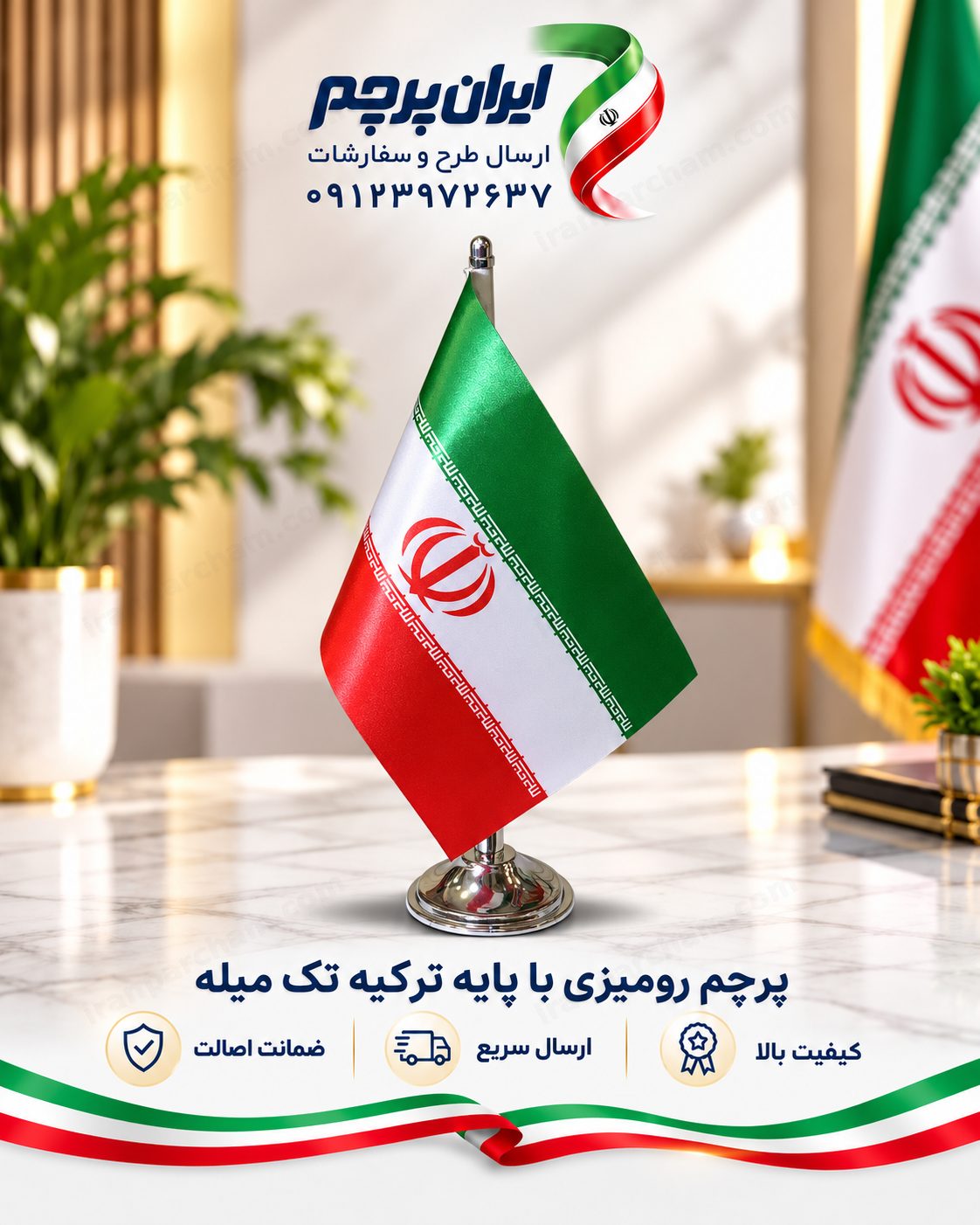
Glossy satin for ceremonies, light fabric for hoisting and double-sided printing for visibility from both sides; fabric choice directly affects a flag's look, life and use. This guide makes the choice simple, by place of use.
Two flags with the same design on two different fabrics give two completely different results. Fabric affects the work's sheen and presence, the flag's behaviour in wind, its lifespan, and even how readable the design is from the back. The good news is that choosing fabric is not complicated; start from the place of use.
Satin has a smooth, glossy surface that reflects light beautifully; that is why it is the first choice for ceremonial and desk flags seen indoors and up close. Colours look deep and formal on satin, and together with gold fringe and a base it makes a splendid set. Satin is not made for the outdoors and permanent wind.
Hoisted flags are mounted on tall poles outdoors and must be light, so they move even in a breeze and do not strain the pole. Light flag fabrics (usually woven polyester) let some air pass through, dry quickly and resist sun and rain better. Printing on these fabrics is usually show-through: the ink reaches the back of the fabric and the design is seen mirrored from behind — for national flags, which are viewed from both sides, this is the natural and accepted behaviour.
If the design must be seen correctly and readably from both sides — for example a company logo on a beach flag, or hanging exhibition flags — the solution is two layers of fabric with a middle layer, each side printed separately. The result is heavier and costlier than show-through printing, but both sides are fully readable. For desk and ceremonial flags, usually seen from one side, this extra cost is unnecessary.
A simple summary: lobby, hall and behind the executive's desk? Satin. Rooftop and outdoors? Light hoisting fabric. Exhibition and two-sided advertising? A double-layer, double-sided build. Meeting tables? Soft satin with good drape and stance. Consider the period of use too: a flag that will stay outdoors for years should be made from a more resistant fabric from the start.
Another point is the fabric's feel and stance. Heavier fabrics stand more steadily on a ceremonial base and crease less, but for hoisting that same weight means less movement and more strain on the pole. In return, a light fabric is livelier in the wind but indoors it does not have the presence and steadiness of a heavy fabric. That is why there is no absolutely 'best fabric'; the best is the one that matches your place and way of use and is made for that job from the start.
Good fabric with weak stitching does not last; pay attention to edge hemming and corner reinforcement, especially on outdoor flags where wind pressure falls on the seams. When you enquire, state the installation place and period of use so the right fabric and stitching are suggested.
If you are torn between options, just write in the quote form on this site where you want the flag and what for; we will suggest the right fabric and quote the price on that basis. Iran Parcham has produced flags in Tehran since 1971 and delivers orders across Iran.
 Iran Parcham